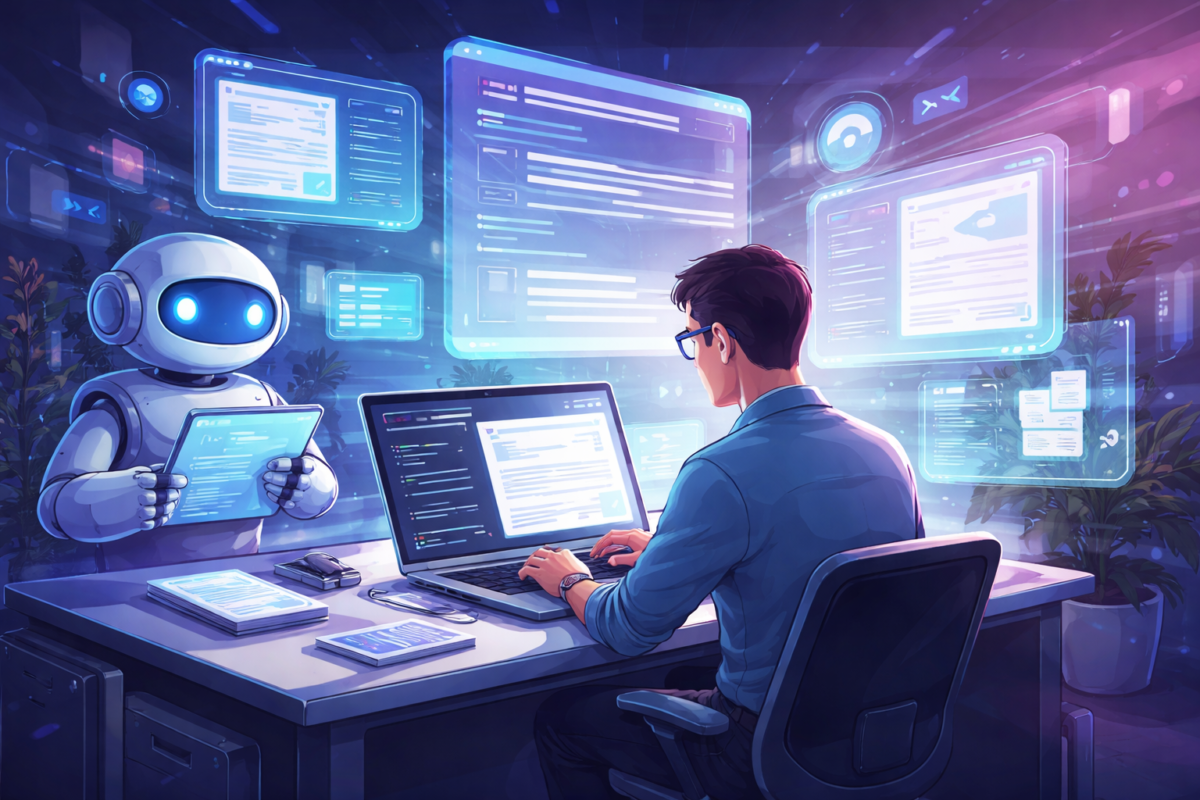
For years, the standard for technical documentation was the monolithic CMS systems designed for “content” in the abstract, but often divorced from the actual environment where software is built. My journey across organizations like Google, Microsoft, and Grafana Labs has fundamentally shifted my perspective toward docs-as-code workflows.
Why the Shift?
Early in my career, I saw the friction caused by siloed documentation. When docs live in a separate web portal managed by a non-developer editor, they naturally drift away from the source code. By adopting tools like Git, Markdown, Hugo, and Docusaurus, we bring documentation into the developer’s native habitat. This allows developers to take responsibility for documenting their own work, and it allows technical writers to be more fully integrated into the team’s development process.
For technical writers transitioning from traditional CMS platforms, this shift represents a fundamental reimagining of your role within the development team. You’re no longer the downstream recipient of incomplete information; you become an embedded collaborator who can see, understand, and influence the code alongside the documentation. This visibility transforms the quality and accuracy of what you produce.
Treating documentation like code means it follows the same lifecycle as the product:
Version Control: Using Git allows for precise tracking of changes and the ability to revert errors instantly. Beyond basic rollback capabilities, Git enables powerful branching strategies where documentation updates can be developed in parallel with features, tested in staging environments, and merged only when the feature ships. This synchronization prevents the common problem of documentation being published too early or too late relative to feature releases.
Peer Review: At Google and elsewhere, I submitted substantial change-lists or pull-requests (PRs), ensuring every word was vetted by engineers through the same code review process they use for features. This peer review culture catches technical inaccuracies before publication and creates shared ownership of documentation quality. Engineers become invested stakeholders rather than reluctant contributors. The review process also serves as an informal mentorship opportunity whereby junior engineers learn from seeing how senior developers critique and improve documentation, while writers gain deeper technical insights through reviewer feedback.
Automation: CI/CD pipelines can run linters to check for broken links or style guide violations before a single page is published. At Grafana Labs, we used linters to check for divergences from the team’s Writers’ Toolkit (our style guide). Advanced teams integrate Vale or other prose linters to enforce terminology consistency, readability metrics, and brand voice guidelines. Some organizations even run automated accessibility checks, ensuring documentation meets Web Content Accessibility Guidelines (WCAG) standards before deployment. This automation amplifies editorial judgment by catching mechanical errors that would otherwise consume review cycles.
Impact on Developer Experience
At Grafana Labs, I collaborated with a director of development and another engineer to lead the building of a developer documentation portal (grafana.com/developers) designed for discoverability. At the open-source observability company, engineers had built several distinct silos of information for their separate projects, but this made it frustrating to find what you needed. The company’s divergent threads for plugin building, specifications, and design system were brought together under one umbrella. You can read all about our journey to creating the portal at “The Grafana developer portal: your gateway to enhanced plugin development.”
When documentation lives in the repository, it becomes more of a “living” entity. Paid developers and open-source contributors alike are more likely to contribute updates or suggest edits when they can simply open a PR. The psychological barrier to contribution drops precipitously when the workflow mirrors what developers already do dozens of times per day.
Moreover, having documentation in the repository enables powerful cross-referencing. Code comments can link directly to documentation sections; documentation can reference specific lines of code with permanent links that update as the codebase evolves. This bidirectional relationship creates a cohesive knowledge ecosystem rather than two separate information silos.
Conclusion
The transition is about a transformation of documentation culture. It’s an acknowledgment that documentation is a first-class citizen of the software development life cycle (SDLC). When we treat docs like code, we bring software engineers and writers together to build better products. This cultural shift manifests in tangible ways: documentation tickets appear in the same sprint planning as feature work, documentation coverage becomes a release criterion, and engineers budget time for documentation the same way they budget for testing.
In the past 7 years since I first started using the docs-as-code workflow, I’ve learned that it isn’t just about version control or static site generators. It’s about breaking down the artificial barriers between code and documentation, between engineers and writers, between the product and its explanation. When those barriers dissolve, both the code and the docs improve, creating a virtuous cycle that benefits everyone: developers, writers, and most importantly, the users trying to understand and use what we’ve built.