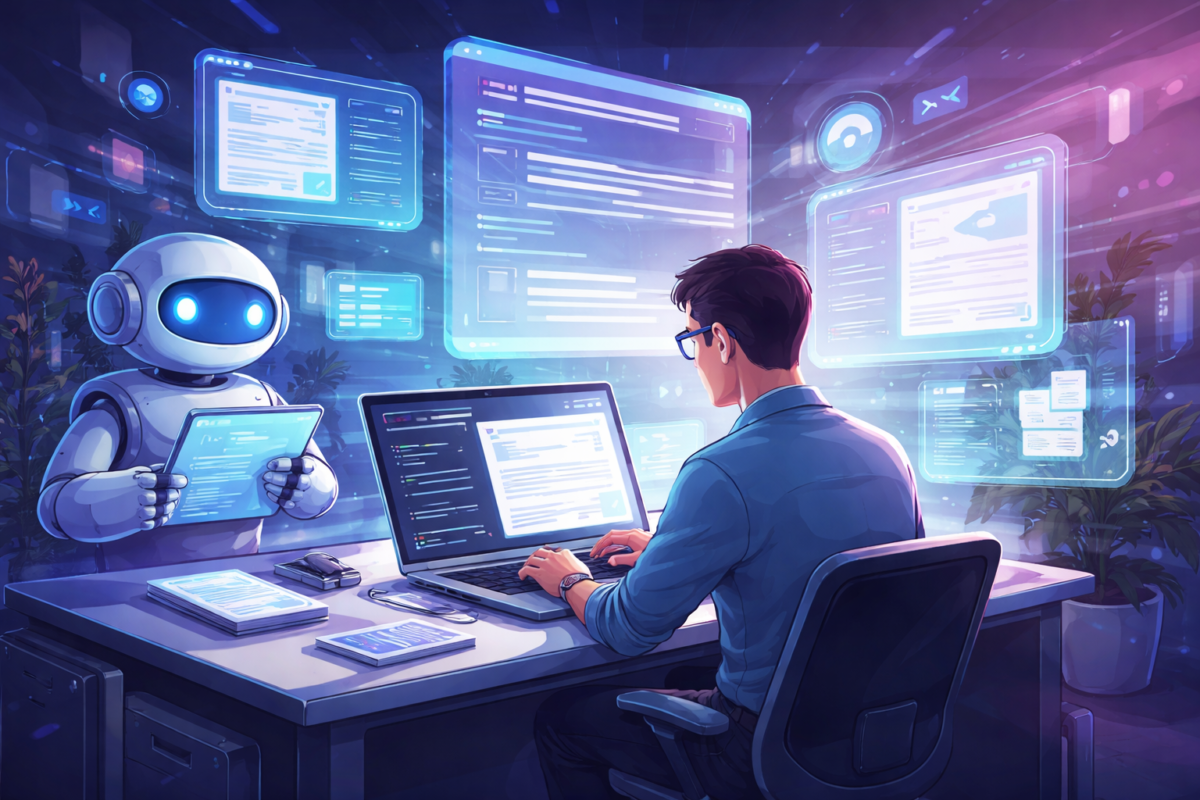
The rise of Generative AI has sparked intense debate in the technical writing community. Some observers see it as an existential threat, while others view it as an unprecedented boon. I see it as something more nuanced: a powerful extension of our existing toolkit that can be transformative or destructive depending on how thoughtfully it’s deployed.
Today, integrating tools like ChatGPT, Gemini, and Claude is mandatory for technical communicators. These are tools that can enhance both velocity and quality when used well. There’s no fighting it, so the best option is to evolve with it.
AI as a Force Multiplier
I use AI not to replace the fundamental writing process, but to automate what I call the “scaffolding” of documentation: the structural and repetitive elements that consume time without adding unique value. My expertise in AI-assisted content workflows and prompt engineering allows me to accelerate delivery without compromising technical accuracy or depth.
Here’s how I strategically integrate these tools into my daily practice:
- Outline Generation: I leverage AI to brainstorm structural frameworks for complex tutorials and technical guides, ensuring I haven’t overlooked standard conceptual steps or logical progressions. This is particularly valuable when documenting unfamiliar systems or when tackling sprawling enterprise platforms.
- Code Sample Refinement: AI excels at generating clean boilerplate code in languages like Python, JavaScript, or TypeScript. I use it to quickly produce initial examples, which I then rigorously test against actual environments, refine for edge cases, and optimize for clarity and best practices.
- Drafting Alt-Text and Metadata: I delegate repetitive, SEO-heavy tasks such as crafting image descriptions, meta descriptions, and keyword-rich headers. AI drafts those elements and this frees up cognitive bandwidth to focus on the core technical narrative and the complex explanations that truly require human expertise.
In some cases, I use AI to prototype articles and help topics, if it’s a well-matched use case. For example, if I find a company’s news release and want to write a journalistic article about it, then AI is well-suited to the task of writing a simple news brief, provided it’s been prompted to do so in my own preferred style.
The key is treating AI as a collaborator in the mundane, not a replacement for critical thinking.
The Importance of Human Oversight
During my time at a technical journalist at Wellesley Information Services, I covered the AI/ML beat extensively, researching emerging models and their practical applications to stay current with rapidly evolving technologies. The most critical lesson I learned is that AI can confidently hallucinate technical details such as API parameters, fabricating version numbers, or suggesting deprecated methods as current best practices. Beyond factual accuracy, AI often lacks creativity in its prose; its formulaic patterns and predictable phrasing can be easily spotted by discerning readers and quickly become tiresome or even alienating.
This is where the technical writer’s value proposition has fundamentally shifted. We’re no longer just writers, we’re what the industry calls “Human-in-the-Loop” operators. Though I prefer a more precise term: “Expert-in-the-Loop”. Here’s what that expertise looks like in practice:
- Verification and Validation: Every AI-generated code snippet must be meticulously verified against the actual API documentation, tested in representative environments, and validated for current best practices. I’ve caught countless instances where AI confidently suggested outdated information.
- Voice and Tone Consistency: AI often produces technically adequate but tonally generic content that lacks the nuanced voice required for specific brand identities. Whether it’s the approachable, reader-first standards I helped establish for SAPinsider or the precision-focused clarity expected at Grafana Labs, maintaining authentic brand voice requires human judgment and sensitivity.
- Complex Synthesis and Context: AI fundamentally struggles with activities that require deep contextual understanding such as interviewing subject matter experts to extract the “why” behind new product releases or synthesizing conflicting stakeholder requirements. These remain uniquely human skills that draw on empathy, experience, and professional intuition.
The Takeaway
The future of technical communication isn’t framed by an “AI vs. Human” dichotomy—it’s defined by the emergence of the AI-augmented writer. By mastering prompt engineering, understanding the capabilities and limitations of large language models, and thoughtfully integrating these tools into our docs-as-code pipelines, we can deliver higher-quality documentation at the accelerated pace demanded by modern software development cycles.
The writers who will thrive in this new landscape aren’t those who resist these tools or those who uncritically embrace them. They’re the professionals who develop the discernment to know when to leverage AI for efficiency and when to rely exclusively on human expertise for accuracy, creativity, and strategic thinking. Expert judgment is what separates good documentation from exceptional documentation in the age of AI.